
You’ve probably heard runners, fitness apps, or local race organizers talk about a 5K race and wondered if it’s something you could actually finish. At first, the distance may sound difficult, especially if you’re new to running or fitness. But once you understand how far is 5K in miles, the challenge suddenly feels much more realistic.
So, how far is 5K in miles exactly?
A 5K equals 3.1 miles. That means when you complete a 5K race, you cover a total distance of 3.1 miles from start to finish. For beginners, this distance is considered one of the best starting points because it’s long enough to challenge you while still being achievable with basic training.
Whether your goal is to lose weight, improve endurance, or complete your first race, understanding how far is 5K in miles can help you train with more confidence and realistic expectations.
What Does 5K Mean?
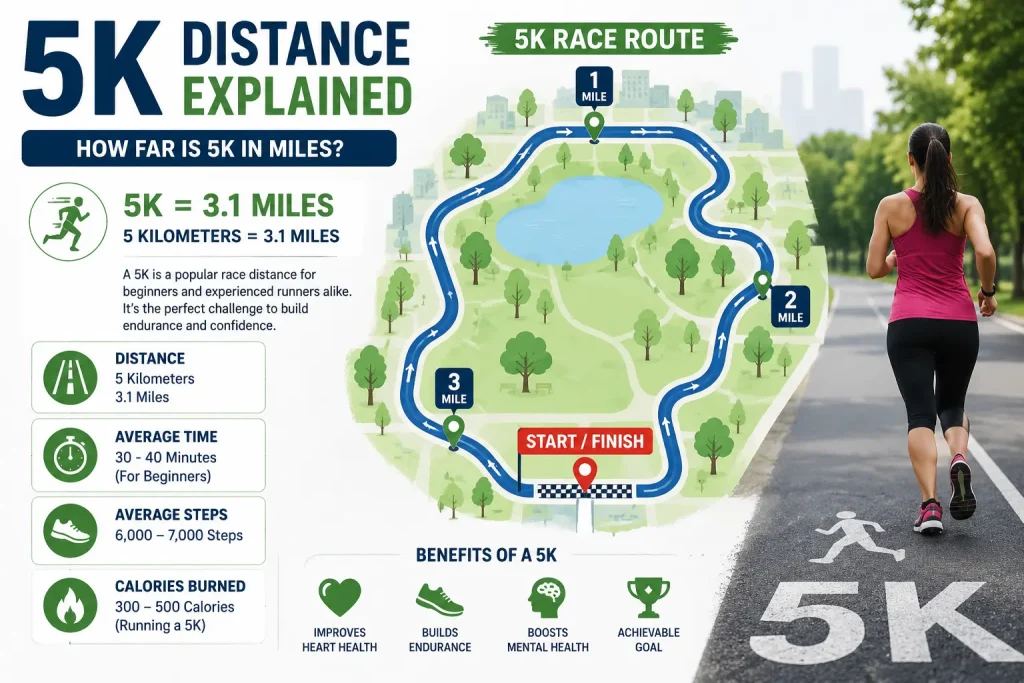
The term “5K” simply means 5 kilometers. Since many countries use kilometers instead of miles, races are often measured using the metric system.
If you’re asking how far is 5K in miles, the answer is simple:
5 kilometers=3.1 miles5\text{ kilometers} = 3.1\text{ miles}5 kilometers=3.1 miles
Knowing how far is 5K in miles helps you visualize the distance more clearly, especially if you’re used to measuring distance in miles instead of kilometers.
Common Running Distance Conversions
| Race Distance | Kilometers | Miles |
|---|---|---|
| 5K | 5 km | 3.1 miles |
| 10K | 10 km | 6.2 miles |
| Half Marathon | 21.1 km | 13.1 miles |
| Marathon | 42.2 km | 26.2 miles |
A 5K race remains one of the most popular race distances worldwide because it works well for both beginners and experienced runners.
How Far Is 5K in Miles for Beginners?
If you’re new to running, you may still wonder how far is 5K in miles compared to your normal daily activity.
To make it easier to understand:
-
- 3.1 miles is about 12–15 laps around a standard running track
-
- It can take roughly 30–60 minutes to complete depending on your pace
-
- Most beginners can train for a 5K within a few weeks
The good news is you do not need to run the entire distance nonstop. Many people complete their first 5K by mixing walking and jogging.
Understanding how far is 5K in miles helps remove the fear around the distance because 3.1 miles feels much more manageable once broken down into smaller goals.
How Long Does a 5K Take?
Once people learn how far is 5K in miles, the next question is usually about finish time.
Your total time depends on:
-
- Fitness level
-
- Running experience
-
- Walking or running pace
-
- Terrain and weather
Average 5K Finish Times
| Fitness Level | Average Time |
|---|---|
| Beginner Walker | 45–60 minutes |
| Beginner Runner | 30–40 minutes |
| Intermediate Runner | 22–30 minutes |
| Advanced Runner | Under 20 minutes |
If you’re training for your first race, focus more on finishing comfortably instead of chasing a fast time.
Why the 5K Is Perfect for Beginners
One reason so many people search for how far is 5K in miles is because they’re thinking about joining their first race.
A 5K is ideal for beginners because:
-
- Training is realistic
-
- Recovery is easier than longer races
-
- It improves cardiovascular health
-
- It helps build consistency
-
- It feels less intimidating than a marathon
You can also walk portions of the race if needed. Many community 5K events welcome walkers, joggers, and runners of all fitness levels.
How Many Steps Are in a 5K?
If you use a smartwatch or fitness tracker, you may wonder how far is 5K in miles in terms of steps.
On average:
-
- A 5K equals around 6,000–7,000 steps
-
- Taller individuals may take fewer steps
-
- Walking usually increases step count slightly
Completing this distance regularly can improve endurance, heart health, and calorie burning.
Estimated Calories Burned During a 5K
| Activity | Estimated Calories Burned |
|---|---|
| Walking a 5K | 200–350 calories |
| Running a 5K | 300–500 calories |
Even walking 3.1 miles provides major health benefits.
Beginner Tips for Completing Your First 5K

Now that you understand how far is 5K in miles, the next step is preparing your body properly.
Start Slowly
One of the biggest beginner mistakes is running too hard during the first week.
Instead:
-
- Walk and jog in intervals
-
- Build endurance gradually
-
- Increase distance slowly each week
Consistency matters more than speed.
Wear Proper Running Shoes
Comfortable shoes can make a huge difference during training.
Good running shoes help:
-
- Protect your knees and ankles
-
- Reduce injury risk
-
- Improve comfort during longer runs
Never wear brand-new shoes on race day.
Stay Hydrated
Hydration affects both performance and recovery.
| Before Running | During Running | After Running |
|---|---|---|
| Drink water 1 hour before | Small sips if needed | Rehydrate properly |
| Eat light carbs | Usually unnecessary for short races | Protein + carbs |
Simple Beginner 5K Training Plan
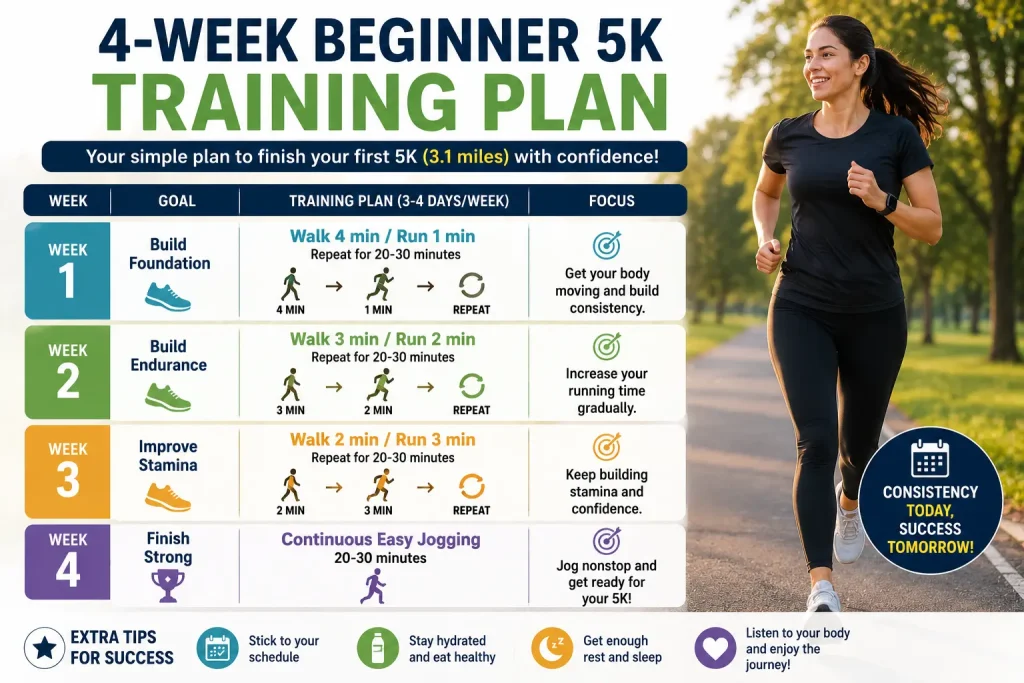
Once you know how far is 5K in miles, creating a training schedule becomes much easier.
4-Week Beginner Plan
| Week | Training Goal |
|---|---|
| Week 1 | Walk 4 min / Run 1 min |
| Week 2 | Walk 3 min / Run 2 min |
| Week 3 | Walk 2 min / Run 3 min |
| Week 4 | Continuous easy jogging |
This gradual method helps your body adapt safely without feeling overwhelmed.
Common 5K Mistakes to Avoid
Understanding how far is 5K in miles is important, but avoiding common mistakes matters too.
Starting Too Fast
Many beginners use too much energy early in the race and struggle later.
Instead:
-
- Begin at a comfortable pace
-
- Control your breathing
-
- Save energy for the final mile
Ignoring Recovery
Rest days are essential for progress.
Recovery helps:
-
- Prevent injuries
-
- Improve endurance
-
- Reduce muscle soreness
Comparing Yourself to Others
Your first 5K is about your own journey. Everyone progresses differently.
Walking vs Running a 5K
You do not have to run the entire race to succeed.
Walking a 5K
Benefits include:
-
- Lower impact on joints
-
- Easier recovery
-
- Beginner-friendly pacing
Running a 5K
Benefits include:
-
- Faster calorie burn
-
- Improved stamina
-
- Better cardiovascular conditioning
Both options are excellent ways to improve fitness.

FAQ About How Far Is 5K in Miles
How far is 5K in miles exactly?
A 5K equals 3.1 miles.
Is a 5K difficult for beginners?
Most beginners can complete a 5K with a few weeks of basic training.
Can you walk a 5K instead of running?
Yes. Many people successfully walk a 5K and still gain excellent health benefits.
How long does it take to train for a 5K?
Most beginners need around 4–8 weeks of consistent training.
Is 3.1 miles a long distance?
For beginners, 3.1 miles can feel challenging at first, but it becomes manageable with regular practice.
Conclusion
If you’ve been wondering how far is 5K in miles, the answer is simple: 3.1 miles.
That distance is long enough to challenge you while still being achievable for beginners. Whether you decide to walk, jog, or run, completing a 5K can improve your fitness, confidence, and overall health.
The most important step is simply getting started. Train consistently, stay patient with yourself, and remember that every experienced runner once started exactly where you are now.
Your first 5K could be closer than you think.