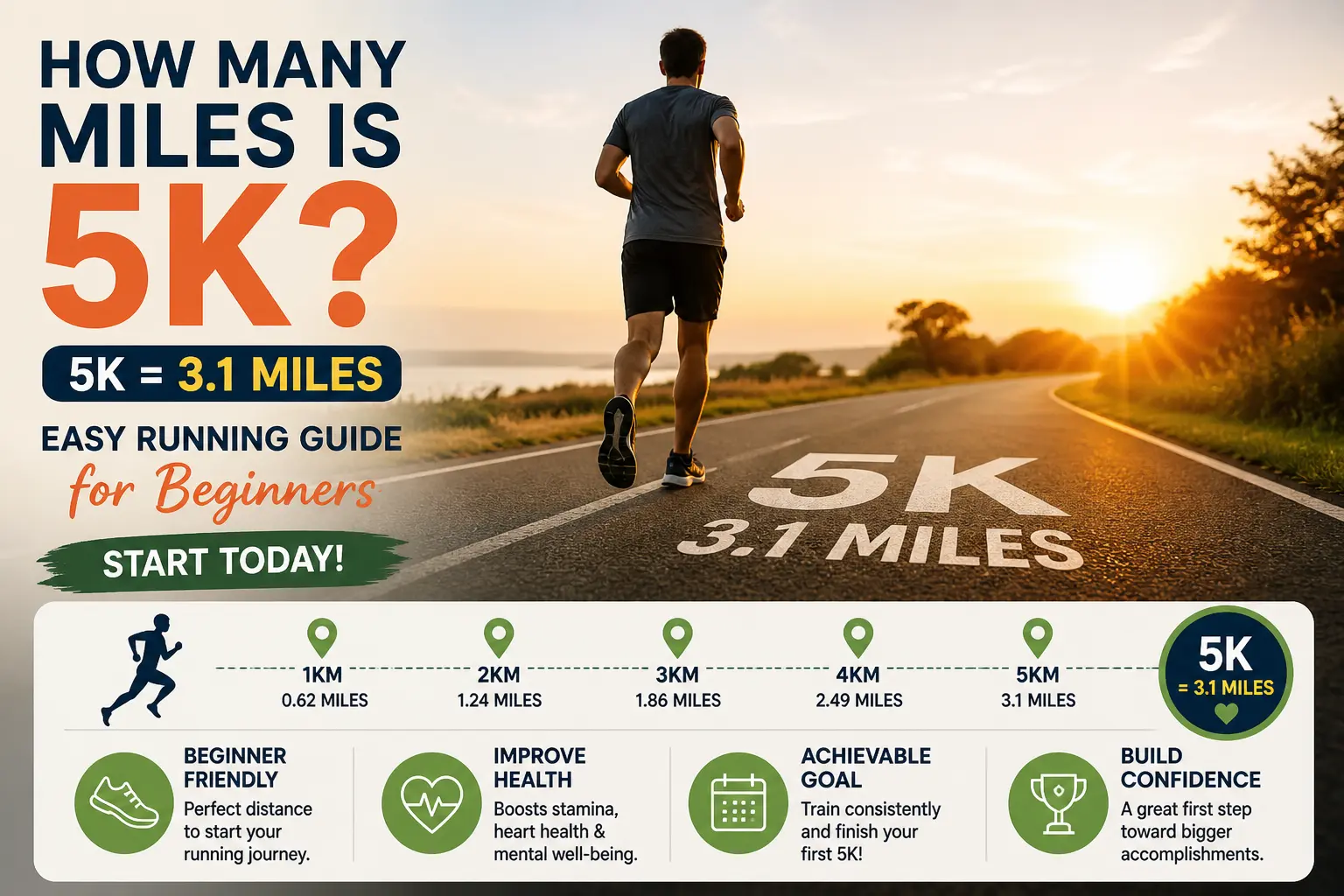
A Simple Question… That Can Change Your Life
You’ve probably thought about it before.
Maybe you saw a local race poster. Maybe a friend invited you.
Or maybe you’re just tired of feeling stuck and want something new.
It sounds simple… until you ask yourself:
How many miles is 5K? And can you actually do it?
If you’re starting from zero, it might feel intimidating.
But here’s the truth most people don’t tell you:
👉 A 5K is not just a distance.
👉 It’s one of the easiest, most powerful ways to rebuild your fitness — and your confidence.
In this guide, you’ll learn exactly how many miles is 5K, how it feels, and how you can train for it step by step — even if you’ve never run before.
How Many Miles Is 5K? (Quick Answer You Need)
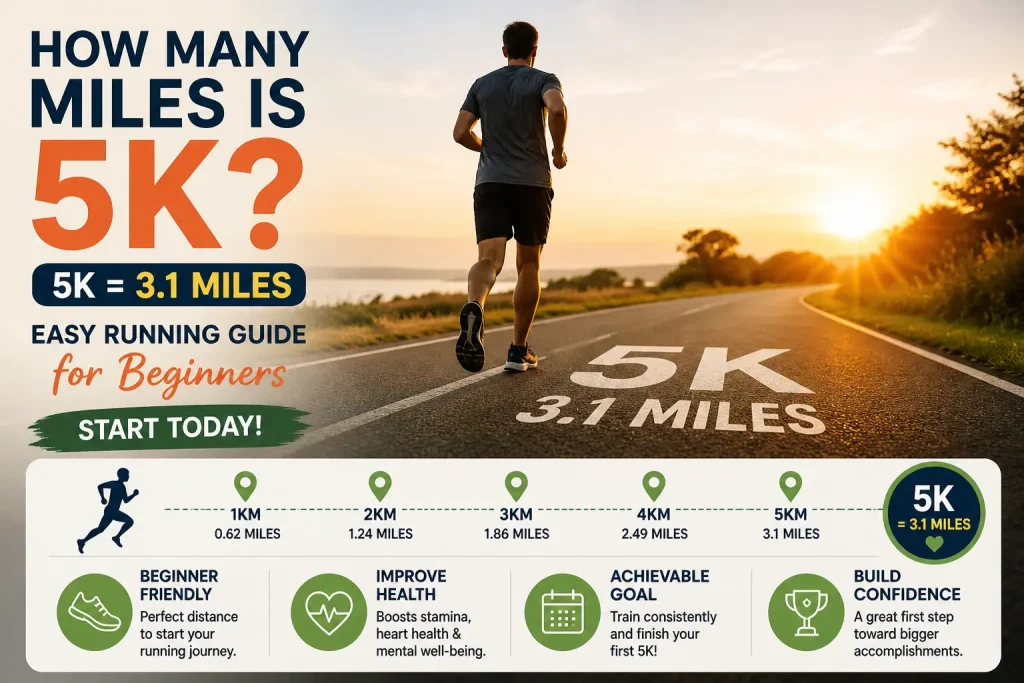
Let’s make it simple:
- 5 kilometers = 3.1 miles
- Exact conversion: 3.10686 miles
That’s it.
So when someone says “run a 5K,” they’re asking you to run just over 3 miles.
Why This Distance Is Perfect for Beginners
You might be wondering… why 5K?
Here’s why it’s so popular:
- It’s short enough to feel achievable
- It’s long enough to challenge your body
- You can train for it in just a few weeks
- It’s the most common race distance worldwide
For comparison:
| Distance | Miles | Difficulty |
|---|---|---|
| 5K | 3.1 miles | Beginner |
| 10K | 6.2 miles | Intermediate |
| Half Marathon | 13.1 miles | Advanced |
👉 A 5K is your perfect entry point into running.
How Far Is a 5K in Real Life? (Make It Visual)
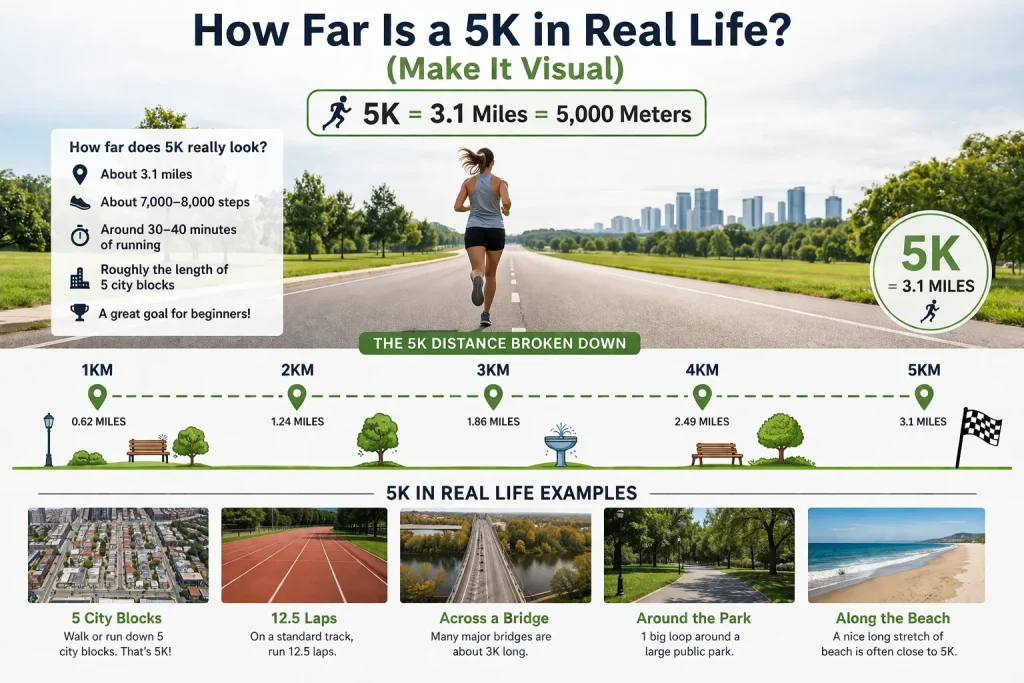
Numbers don’t always help. Let’s make it real.
What 3.1 Miles Actually Feels Like
- Walking: about 30–45 minutes
- Easy jogging: 25–40 minutes
- Beginner running pace: 30–35 minutes
Easy Ways to Imagine a 5K
- Around a large city park
- Roughly 12–13 laps on a standard running track
- A short run through your neighborhood and back
👉 It’s not as far as it sounds — especially when you break it down.
Is Running a 5K Hard for Beginners?
Short answer: it can feel hard at first — but it’s absolutely doable.
What Makes It Feel Difficult
When you’re starting, your body isn’t used to running. You might notice:
- Heavy breathing after a few minutes
- Legs getting tired quickly
- Feeling like you need to stop
This is normal.
What Makes It Easier (This Is the Key)
Instead of trying to run nonstop, smart beginners use a simple strategy:
👉 Run + Walk Method
This means:
- Run for a short time
- Walk to recover
- Repeat
This approach helps you:
- Build endurance safely
- Avoid burnout
- Stay consistent
👉 Most people fail not because it’s too hard — but because they go too fast, too soon.
Easy 5K Training Plan for Beginners (Step-by-Step)
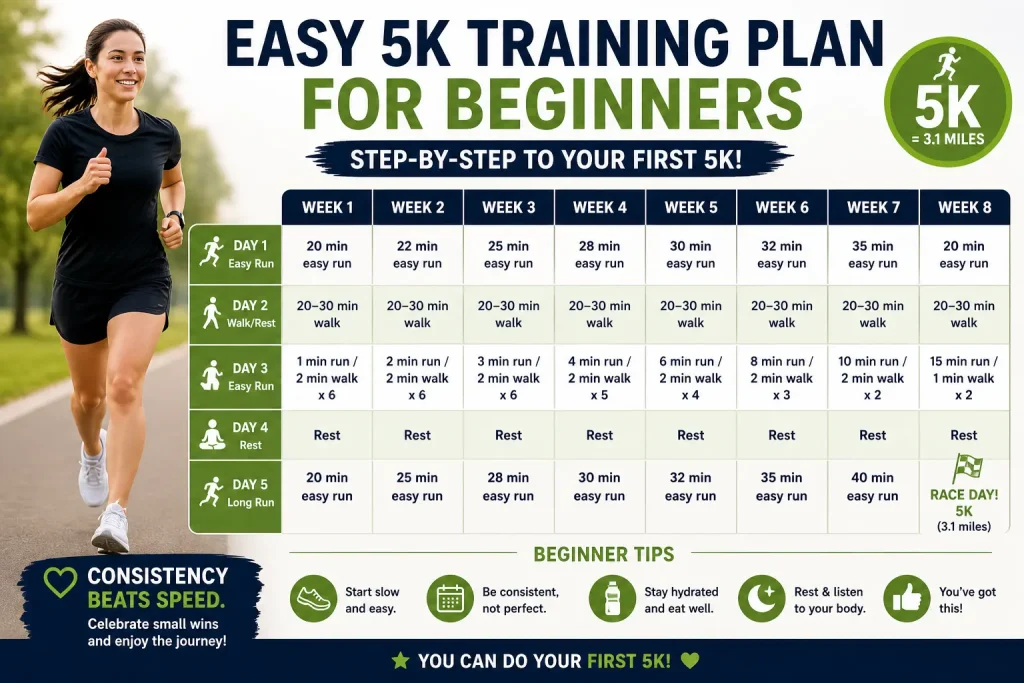
You don’t need a complicated program.
You just need consistency.
Simple 5K Plan (4–6 Weeks)
Week 1–2: Start Slow
- Walk 5 minutes (warm-up)
- Run 30 seconds
- Walk 90 seconds
- Repeat 6–8 times
👉 Focus: getting comfortable
Week 3–4: Build Rhythm
- Run 1 minute
- Walk 1 minute
- Repeat for 20–25 minutes
👉 Focus: improving endurance
Week 5–6: Go Further
- Run longer intervals (2–5 minutes)
- Shorter walk breaks
- Aim for 25–30 minutes total
👉 Focus: getting closer to full 5K
Golden Rules You Should Follow
- Run 3 times per week
- Always include rest days
- Don’t compare yourself to others
- Progress slowly — that’s how you improve
👉 Consistency beats intensity every time.
What to Eat Before a 5K Run (Simple Fuel Guide)

You don’t need supplements or complicated diets.
Just simple, effective food.
Best Pre-Run Foods
| Food | Why It Works | When to Eat |
|---|---|---|
| Banana | Quick energy (carbs) | 30–60 min before |
| Oatmeal | Long-lasting fuel | 1–2 hours before |
| Toast + peanut butter | Balanced energy | 1 hour before |
| Black coffee | Boost focus (optional) | 30 min before |
Hydration Tips
- Drink water before your run
- Avoid heavy meals right before
- Keep it light and simple
👉 Your body doesn’t need perfection — it needs consistency.
Common Beginner Mistakes (And How to Avoid Them)
If you avoid these, you’ll progress much faster.
Mistake #1: Running Too Fast
- You start strong… then crash
✔ Fix: Run at a pace where you can talk
Mistake #2: Skipping Warm-Up
- Increases injury risk
✔ Fix: Walk 3–5 minutes before running
Mistake #3: No Rest Days
- Leads to burnout
✔ Fix: Rest is part of training
Mistake #4: Wrong Shoes
- Causes discomfort or pain
✔ Fix: Use basic running shoes with good support
👉 Running is simple — but small mistakes slow you down.
Benefits of Running a 5K (Why It’s Worth It)
Once you start, you’ll feel it quickly.
Physical Benefits
- Improves heart health
- Burns 200–400 calories per run
- Builds stamina and endurance
Mental Benefits
- Reduces stress and anxiety
- Boosts confidence
- Builds discipline
👉 The biggest change isn’t your body — it’s your mindset.
5K vs 10K vs Half Marathon (What Should You Choose?)

| Distance | Miles | Who It’s For | Training Time |
|---|---|---|---|
| 5K | 3.1 miles | Beginners | 4–6 weeks |
| 10K | 6.2 miles | Intermediate | 6–10 weeks |
| Half Marathon | 13.1 miles | Advanced | 10–16 weeks |
👉 Start with a 5K. Build from there.
Frequently Asked Questions (FAQ)
How many miles is 5K exactly?
A 5K equals 3.1 miles.
Can you run a 5K without stopping as a beginner?
Yes — most beginners can achieve this within 4–8 weeks of training.
How long does it take to run a 5K?
- Beginners: 30–40 minutes
- Average runners: 20–30 minutes
Is walking a 5K okay?
Absolutely. Many people complete their first 5K by walking.
How many steps is a 5K?
Around 4,000 to 6,000 steps, depending on your stride.
Conclusion: Your First 5K Starts Now
A 5K is only 3.1 miles.
But what it represents is much bigger.
It’s your first step into discipline.
Your first proof that you can commit to something — and finish it.
You don’t need to be fast.
You don’t need to be perfect.
👉 You just need to start.
So here’s your next move:
- Lace up your shoes
- Go outside
- Walk… then run a little
That’s it.
Your 5K journey doesn’t start when you’re ready.
It starts when you begin.