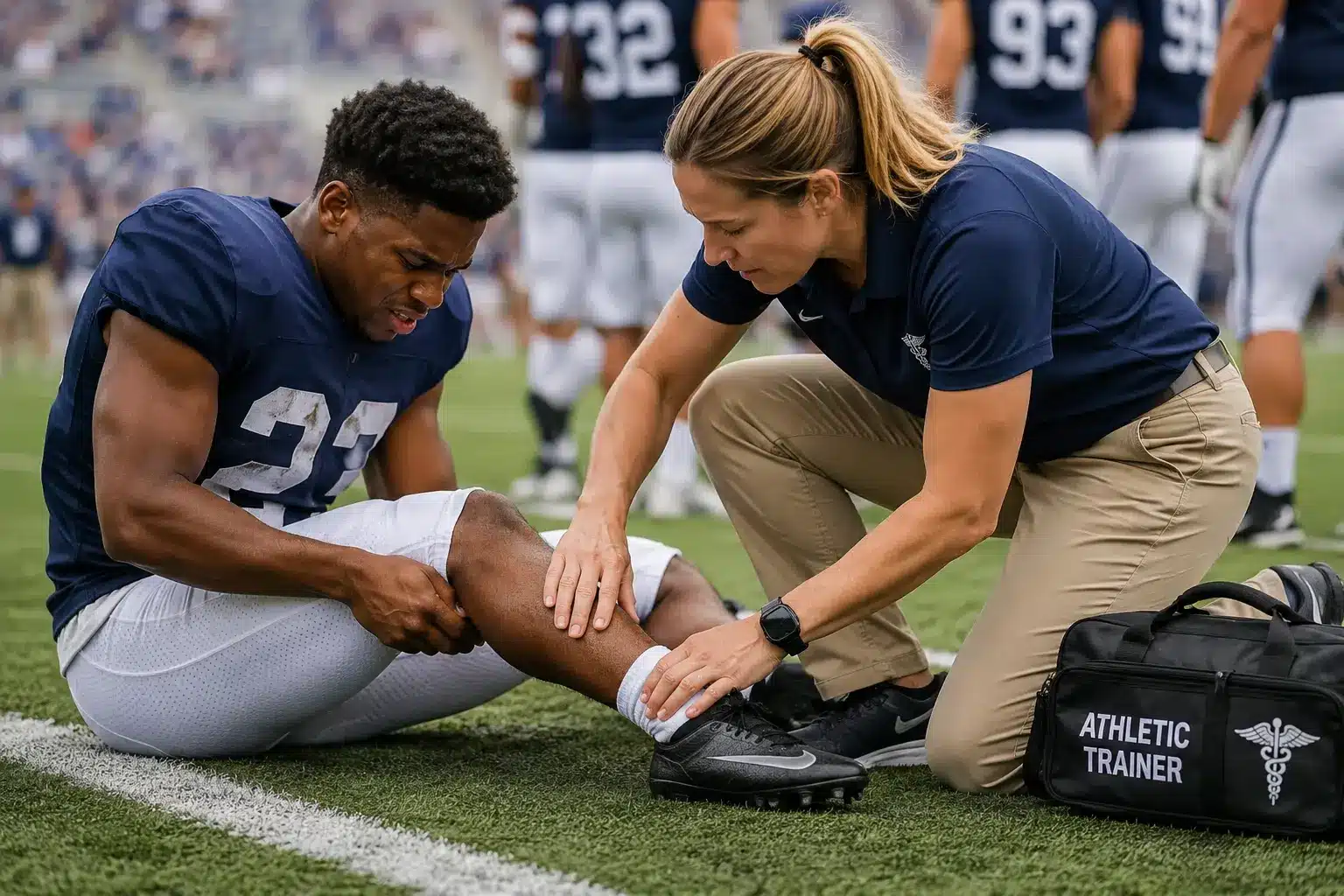
You’ve probably seen athletic trainers on the sidelines during football games, basketball matches, or track events. They’re the first people athletes run to after an injury, but their job goes far beyond wrapping ankles or handing out ice packs. Athletic trainers play a major role in injury prevention, recovery, rehabilitation, and athlete performance.
If you’re interested in sports medicine, healthcare, or fitness careers, understanding what an athletic trainer does can help you decide if this path is right for you. In this beginner’s guide, you’ll learn about the daily responsibilities of an athletic trainer, the skills you need, salary expectations, and how to start a career in athletic training.
What Is an Athletic Trainer?
An athletic trainer is a healthcare professional who specializes in preventing, diagnosing, and treating muscle and joint injuries. They work closely with athletes, coaches, doctors, and physical therapists to keep people healthy and active.
Many people confuse athletic trainers with personal trainers, but they are completely different careers. A personal trainer mainly focuses on fitness goals and exercise programs, while an athletic trainer deals with medical care, injury recovery, and rehabilitation.
Athletic trainers are commonly found in:
- High schools
- Colleges and universities
- Professional sports teams
- Hospitals and clinics
- Military facilities
- Fitness and rehabilitation centers
Their main goal is simple: help people move safely and recover faster.
What Does an Athletic Trainer Do Daily?
The daily responsibilities of an athletic trainer can change depending on where they work, but most athletic trainers focus on four key areas.
Injury Prevention
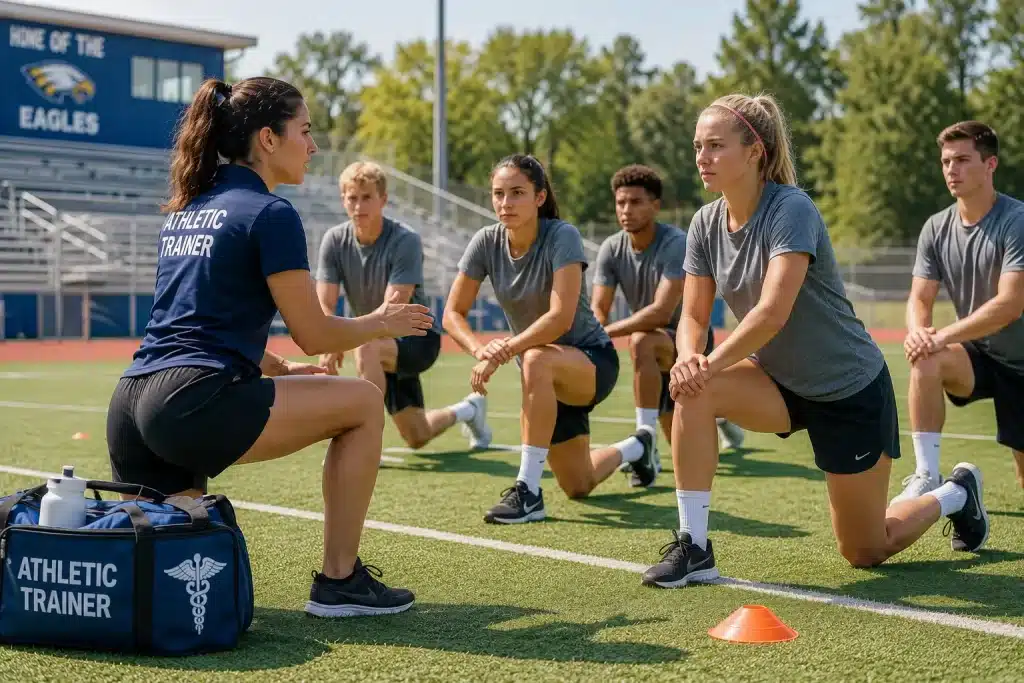
One of the most important parts of athletic training is stopping injuries before they happen. Athletic trainers create warm-up routines, stretching programs, and conditioning plans that reduce the risk of injury.
You might see an athletic trainer:
- Checking an athlete’s movement patterns
- Monitoring flexibility and mobility
- Teaching proper exercise form
- Recommending recovery strategies
- Tracking hydration and fatigue levels
Small adjustments can prevent serious injuries later in the season.
Emergency Injury Care
When injuries happen during games or practices, athletic trainers are usually the first medical professionals to respond.
They evaluate injuries quickly and decide whether an athlete can continue playing or needs medical attention. This includes handling situations like:
- Sprained ankles
- Concussions
- Muscle tears
- Dislocated joints
- Heat exhaustion
Athletic trainers stay calm under pressure and make fast decisions that protect the athlete’s health.
Rehabilitation and Recovery
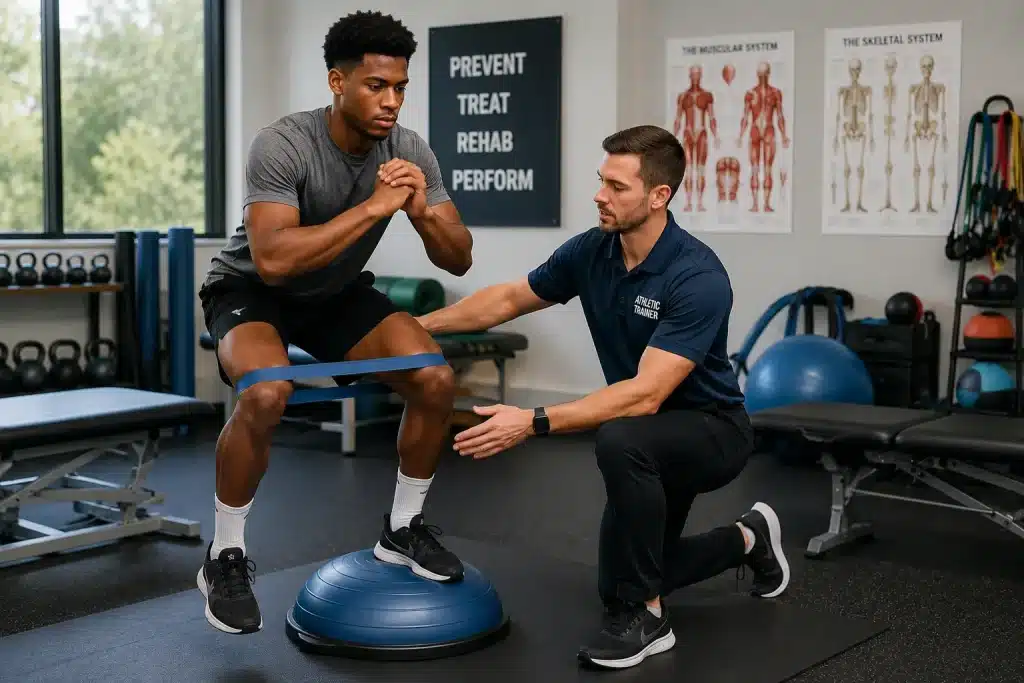
Recovery is another major part of athletic training. After an injury, athletic trainers guide athletes through rehabilitation programs designed to rebuild strength and mobility safely.
Here’s a simple example of common rehabilitation methods:
| Injury Type | Common Rehab Method | Recovery Time |
|---|---|---|
| Ankle Sprain | Mobility exercises and balance work | 2–6 weeks |
| ACL Injury | Strength and physical therapy program | 6–12 months |
| Muscle Strain | Stretching and light resistance training | 1–4 weeks |
| Shoulder Injury | Band exercises and stability work | 4–12 weeks |
The goal is not just recovery, but helping the athlete return stronger and safer.
Working With Healthcare Professionals
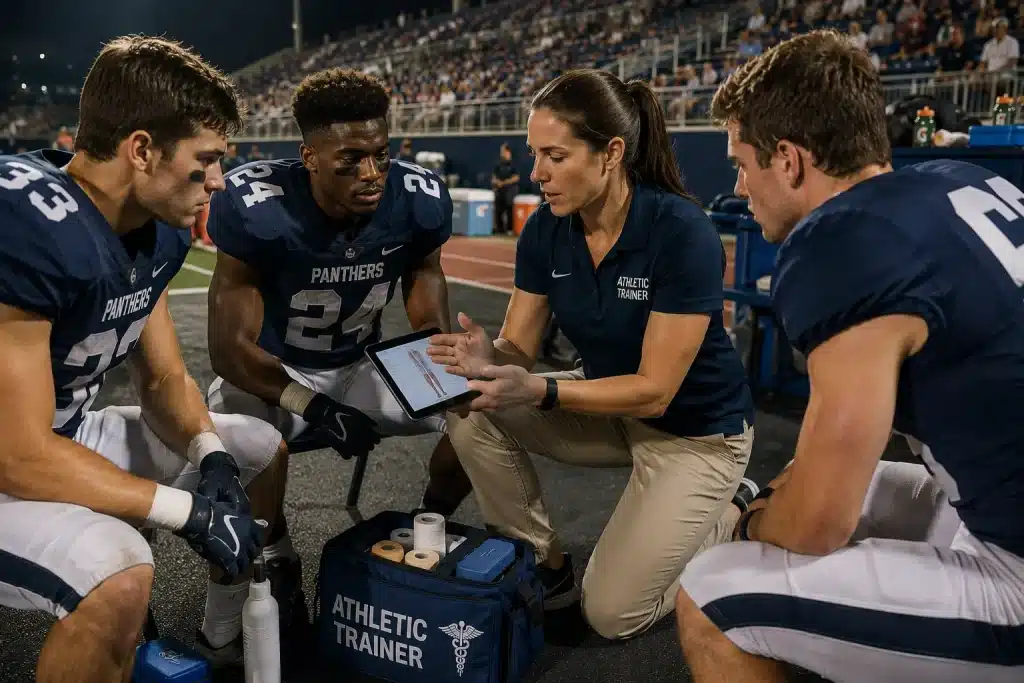
Athletic trainers rarely work alone. They communicate regularly with doctors, physical therapists, coaches, and strength coaches.
For example, if an athlete suffers a knee injury, the athletic trainer may:
- Evaluate the injury initially
- Coordinate with a physician
- Create a rehabilitation plan
- Track progress weekly
- Decide when the athlete can safely return
This teamwork helps athletes recover more efficiently.
Where Do Athletic Trainers Work?
Athletic training careers offer more variety than many people realize.
Schools and Universities
Many athletic trainers work with student-athletes at high schools and colleges. In these settings, you help athletes stay healthy throughout the sports season while educating them about injury prevention.
Professional Sports Teams
Working with professional athletes is one of the most recognized career paths in athletic training. These jobs can involve:
- Traveling with teams
- Long game schedules
- High-pressure situations
- Advanced recovery technology
Although competitive, professional sports jobs can be rewarding and exciting.
Hospitals and Sports Clinics
Some athletic trainers work in healthcare settings where they help patients recover from injuries, surgeries, or chronic pain conditions.
This environment often provides more stable schedules compared to sports teams.
Military and Fitness Centers
Athletic trainers are also becoming more common in military programs and fitness facilities. They help active individuals improve movement quality and reduce injury risks during training.
Skills Every Athletic Trainer Needs
Becoming a successful athletic trainer requires more than sports knowledge.
Communication Skills
You need to explain injuries clearly, motivate athletes during recovery, and work effectively with healthcare teams.
Good communication builds trust between you and the athletes you help.
Medical Knowledge
Athletic trainers study anatomy, rehabilitation, emergency care, and injury assessment. Understanding how the body moves is essential for creating safe treatment plans.
Physical and Mental Stamina
Athletic trainers often spend long hours standing during games, traveling with teams, or responding to emergencies. Mental focus is just as important as physical endurance.
Problem-Solving Ability
No two injuries are exactly the same. Athletic trainers constantly adapt recovery programs based on the athlete’s condition and progress.
How to Become an Athletic Trainer
If you’re interested in athletic training, here’s the typical career path.
Step 1: Earn a Degree
Most athletic trainers complete an accredited athletic training program. Many careers now require a master’s degree in athletic training.
Step 2: Gain Clinical Experience
Hands-on experience is a major part of athletic training education. You’ll work directly with athletes and patients during internships or clinical rotations.
Step 3: Pass Certification Exams
To become a certified athletic trainer, you must pass the Board of Certification (BOC) exam.
Step 4: Apply for State Licensure
Many states require athletic trainers to obtain a license before practicing professionally.
Athletic Trainer Salary and Career Outlook
Athletic training continues to grow as more organizations focus on injury prevention and athlete health.
Here’s a general salary overview:
| Work Setting | Average Salary Range |
|---|---|
| High Schools | $45,000–$60,000 |
| Colleges | $55,000–$75,000 |
| Hospitals and Clinics | $50,000–$80,000 |
| Professional Sports | $75,000–$120,000+ |
Your salary can vary depending on location, education, certifications, and experience level.
The demand for athletic trainers is expected to grow as sports participation and health awareness continue increasing.
Athletic Trainer vs Personal Trainer
People often confuse these two careers, but they serve very different purposes.
| Athletic Trainer | Personal Trainer |
|---|---|
| Treats injuries | Focuses on fitness goals |
| Medical healthcare role | Fitness coaching role |
| Works with doctors | Works mainly with gym clients |
| Certified medical professional | Certified fitness professional |
If you enjoy healthcare and rehabilitation, athletic training may fit you better than personal training.
FAQ About Athletic Trainers
What does an athletic trainer do?
An athletic trainer prevents injuries, provides emergency care, and helps athletes recover safely after injuries.
Is an athletic trainer a doctor?
No. Athletic trainers are healthcare professionals, but they are not medical doctors.
How long does it take to become an athletic trainer?
Most people spend 4–6 years completing education, clinical training, and certification requirements.
Do athletic trainers only work with athletes?
No. Athletic trainers also work in clinics, hospitals, military programs, and rehabilitation centers.
Conclusion
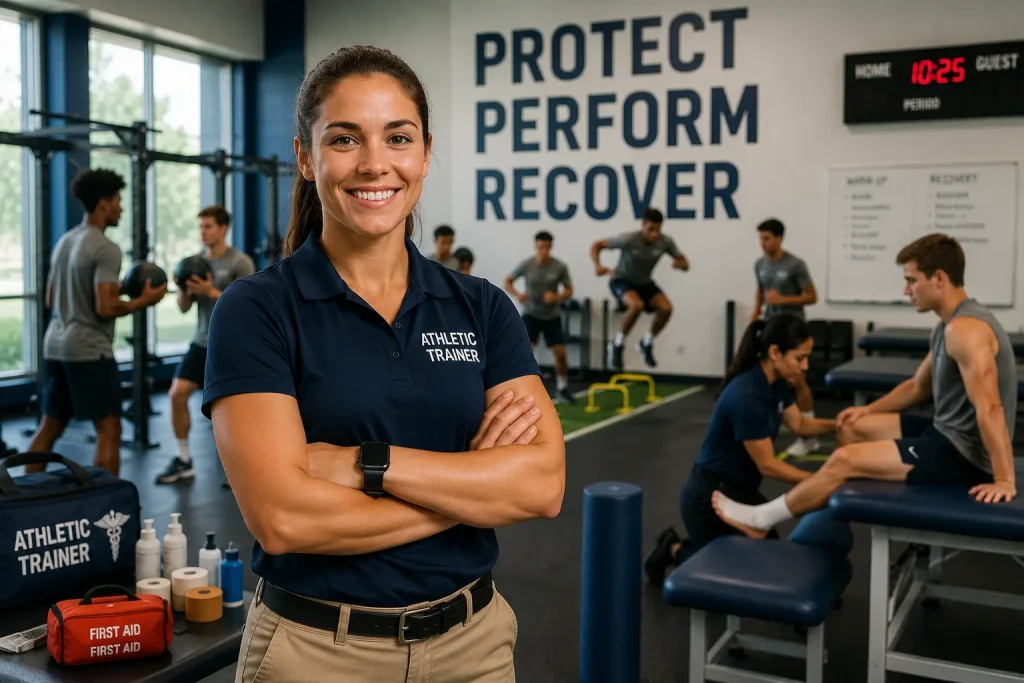
Athletic trainers play a huge role in sports and healthcare. They help athletes avoid injuries, recover safely, and perform at their best. Whether you dream of working with professional teams or helping active people stay healthy, athletic training offers a career filled with purpose and growth opportunities.
If you’re passionate about fitness, healthcare, and helping others, this could be the perfect career path for you.
Ready to learn more about sports careers, fitness, and performance training? Explore more expert guides on your fitness journey and start building the future you want today.