
running plans for beginners, Starting your running journey can feel exciting… and intimidating at the same time.
Maybe you’ve seen experienced runners posting long distances online and thought, “There’s no way I can do that.” The truth is, every runner starts at the beginning. Nobody wakes up one day ready to run 10 kilometers without preparation.
That’s why following proper running plans for beginners matters so much. A smart plan helps you build endurance safely, avoid injuries, and stay motivated long enough to see real progress.
You don’t need expensive gear. You don’t need elite fitness. You simply need consistency, patience, and a beginner-friendly running routine that works for your body.
In this guide, you’ll learn exactly how to start running safely, what mistakes to avoid, and how to follow a simple weekly running plan designed for beginners.
Why Running Is Perfect for Beginners
Some benefits of running for beginners include:
- Better heart health
- Increased stamina
- Improved mood
- More energy during the day
- Better sleep quality
- Weight management support
Many beginner runners notice mental improvements before physical changes. Even short runs can reduce stress and help you feel more confident.
What You Need Before Starting a running plans for beginners
Before you begin, focus on keeping things simple.
Choose Comfortable Running Shoes
Your shoes matter more than expensive fitness gadgets. A good pair of running shoes helps reduce stress on your knees and ankles.
Look for:
- Comfortable cushioning
- Proper foot support
- Lightweight design
- Breathable material
Avoid using old gym shoes that no longer provide support.
Wear Comfortable Clothing
You don’t need professional athlete gear. Comfortable clothes that allow movement are enough.
Choose:
- Lightweight shirts
- Breathable socks
- Comfortable shorts or leggings
Start With Realistic Expectations
One of the biggest beginner mistakes is trying to run too fast too early.
Your goal during the first few weeks is not speed. Your goal is consistency.
Running Plans for Beginners: Simple 4-Week Schedule
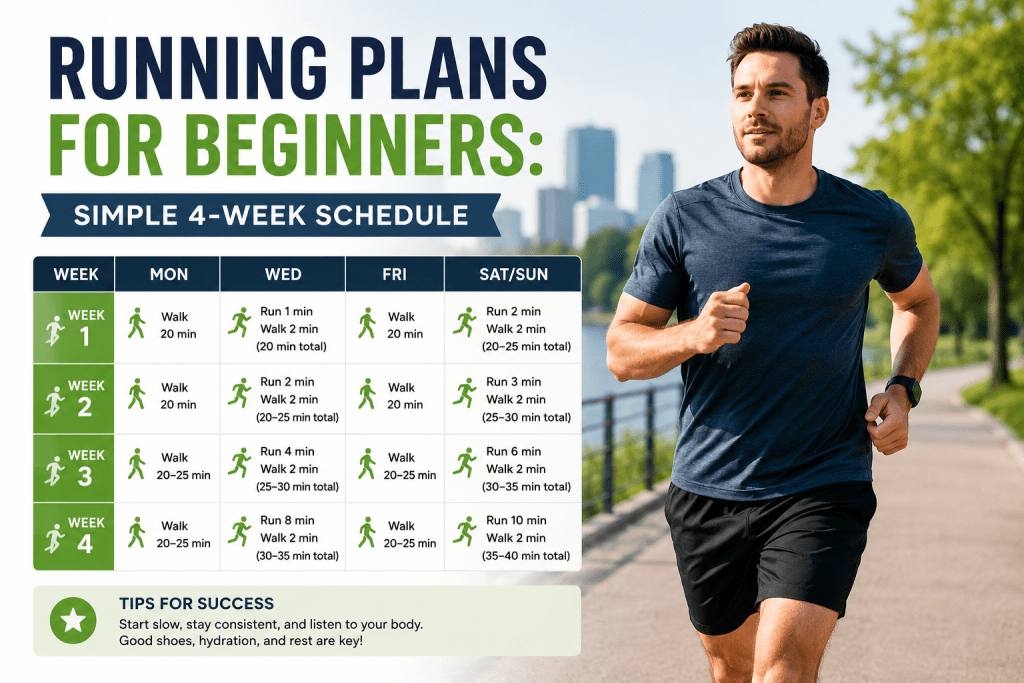
running plans for beginners helps your body adapt gradually while reducing injury risk.
Week 1
| Day | Workout |
|---|---|
| Monday | Walk 20 minutes |
| Tuesday | Run/Walk 15 minutes |
| Wednesday | Rest |
| Thursday | Run/Walk 15 minutes |
| Friday | Rest |
| Saturday | Walk 30 minutes |
| Sunday | Rest |
Week 2
| Day | Workout |
|---|---|
| Monday | Run/Walk 20 minutes |
| Tuesday | Rest |
| Wednesday | Run/Walk 20 minutes |
| Thursday | Walk 25 minutes |
| Friday | Rest |
| Saturday | Run/Walk 25 minutes |
| Sunday | Rest |
Week 3
| Day | Workout |
|---|---|
| Monday | Run 15 minutes |
| Tuesday | Rest |
| Wednesday | Run 20 minutes |
| Thursday | Walk 20 minutes |
| Friday | Rest |
| Saturday | Run 25 minutes |
| Sunday | Rest |
Week 4
| Day | Workout |
|---|---|
| Monday | Run 20 minutes |
| Tuesday | Rest |
| Wednesday | Run 25 minutes |
| Thursday | Walk 20 minutes |
| Friday | Rest |
| Saturday | Run 30 minutes |
| Sunday | Rest |
Important Beginner Tips
- Run slowly enough to hold a conversation
- Walking during runs is completely normal
- Rest days are part of progress
- Consistency matters more than intensity
Warm-Up Before Every Run
Skipping warm-ups is one of the fastest ways to get injured.
Before each session, spend 5 minutes preparing your body.
Simple Warm-Up Routine
- Arm circles
- Leg swings
- Light walking
- Bodyweight squats
- Dynamic stretches
A warm-up improves blood flow and helps your muscles move more efficiently.
Cool-Down After Running
Cooling down helps your body recover properly after workouts.
Best Cool-Down Exercises
- Hamstring stretch
- Quad stretch
- Calf stretch
- Deep breathing
Stretch gently instead of forcing flexibility.
Best Foods for Beginner Runners

Your body needs fuel to recover and improve.
You don’t need a complicated diet. Focus on balanced meals with protein, healthy carbs, and hydration.
Foods to Eat Before Running
| Food | Benefit |
|---|---|
| Banana | Quick energy |
| Oatmeal | Long-lasting energy |
| Toast with peanut butter | Balanced fuel |
Foods to Eat After Running
| Food | Benefit |
|---|---|
| Eggs | Muscle recovery |
| Greek yogurt | Protein and probiotics |
| Rice and chicken | Energy replenishment |
| Smoothies | Hydration and nutrients |
Drinking enough water is also essential, especially during warmer days.
Common Beginner Running Mistakes
Many new runners quit because they push too hard too soon.
Avoid these mistakes:
Running Too Fast
You are building endurance, not racing.
Slow running is still effective.
Ignoring Recovery
Your body gets stronger during recovery, not during the workout itself.
Rest days help prevent burnout and injuries.
Comparing Yourself to Others
Your journey is personal.
Some people improve quickly. Others need more time. Both are completely normal.
How to Stay Motivated as a Beginner Runner

Motivation comes and goes. Building habits matters more.
Simple Ways to Stay Consistent
- Track your progress
- Set small goals
- Listen to music or podcasts
- Run with friends
- Celebrate small wins
Instead of focusing on huge transformations, focus on simply showing up every week.
Running vs Walking: Which Is Better?
For beginners, combining both is usually the smartest approach.
Walking helps:
- Build endurance safely
- Reduce stress on joints
- Improve recovery
Running helps:
- Burn calories faster
- Improve cardiovascular fitness
- Build stamina
That’s why most beginner running plans include both walking and running intervals.
How Long Does It Take to See Results?

Results depend on consistency, sleep, nutrition, and workout frequency.
However, many beginners notice:
| Timeline | Possible Changes |
|---|---|
| 1 Week | More energy |
| 2–3 Weeks | Easier breathing |
| 1 Month | Better endurance |
| 2–3 Months | Visible fitness improvements |
The key is staying patient during the early stages.
Frequently Asked Questions About Running Plans for Beginners
How many days a week should beginners run?
Most beginners should run 2–4 times per week.
Is running every day bad for beginners?
Yes, daily running can increase injury risk for new runners.
How long should beginner runs be?
Starting with 15–30 minute sessions is ideal.
Can beginners lose weight with running?
Yes, especially when running is combined with healthy eating habits.
Should beginners run fast or slow?
Slow running is best for building endurance safely.
Conclusion
Starting a running routine may feel difficult at first, but every small step matters.
You do not need perfect fitness to begin. You simply need the courage to start and the patience to stay consistent.
The best running plans for beginners are simple, realistic, and sustainable. Focus on building habits instead of chasing perfection.
One slow run today can become a life-changing habit months from now.
So lace up your shoes, take your first step, and begin your running journey today.