
Starting your running journey can feel overwhelming at first. You may wonder if you are fit enough, fast enough, or disciplined enough to complete a 10K. The good news is that you do not need years of experience to become a runner. You simply need a smart plan, patience, and consistency.
A beginner-friendly 10k training plan helps you build endurance step by step without pushing your body too hard too soon. Whether your goal is improving your health, losing weight, boosting your confidence, or finishing your very first race, this guide will help you train safely and stay motivated.
By the end of this article, you will have an easy weekly running schedule, beginner tips, nutrition advice, and practical strategies that make running feel more enjoyable and sustainable.
Why a 10K Training Plan Is Perfect for Beginners

A 10K race equals 6.2 miles or 10 kilometers. It is one of the most popular race distances because it challenges your endurance without requiring the extreme preparation of a marathon.
For beginners, a structured 10k training plan offers several advantages:
- Helps you avoid injuries
- Builds stamina gradually
- Improves cardiovascular fitness
- Creates a consistent routine
- Keeps you motivated with measurable progress
Unlike random workouts, a running schedule gives your body time to adapt. This makes your training more effective and far less frustrating.
Benefits of Running for Beginners
Physical Benefits
Running regularly can transform your health in ways you may notice within just a few weeks.
Some of the biggest physical benefits include:
- Improved heart health
- Better lung capacity
- Increased calorie burn
- Stronger muscles and joints
- Enhanced endurance
Even short beginner runs can improve your energy levels during the day. Many new runners also notice better sleep and improved focus.
Mental Benefits
Running is not only physical. It also changes your mindset.
When you complete difficult workouts, you build confidence. You start believing in your ability to stay disciplined and push through challenges.
Running may also help reduce:
- Stress
- Anxiety
- Mental fatigue
Many beginners say their daily runs become the best part of their routine because it gives them time to clear their mind.
Essential Tips Before Starting Your 10K Training Plan
Start Slower Than You Think
One of the biggest beginner mistakes is running too fast.
You do not need to sprint during every workout. In fact, most of your runs should feel comfortable enough to hold a conversation.
If running continuously feels difficult, use the walk/run method:
- Run for 1 minute
- Walk for 2 minutes
- Repeat for 20–30 minutes
This approach helps you build endurance safely.
Buy Proper Running Shoes
Your shoes matter more than expensive fitness gadgets.
A good pair of running shoes can:
- Reduce joint stress
- Improve comfort
- Prevent injuries
Choose shoes designed specifically for running rather than general gym training.
Focus on Consistency
You do not need perfect workouts every day.
Consistency matters far more than intensity.
Running three times every week for two months will produce better results than running hard for one week and quitting.
Warm Up Before Every Run
A quick warm-up prepares your body for movement and reduces stiffness.
Try this simple routine:
- Leg swings
- Arm circles
- High knees
- Light jogging for 2 minutes
After your run, spend a few minutes stretching your calves, hamstrings, and hips.
Beginner 10K Training Plan Weekly Schedule
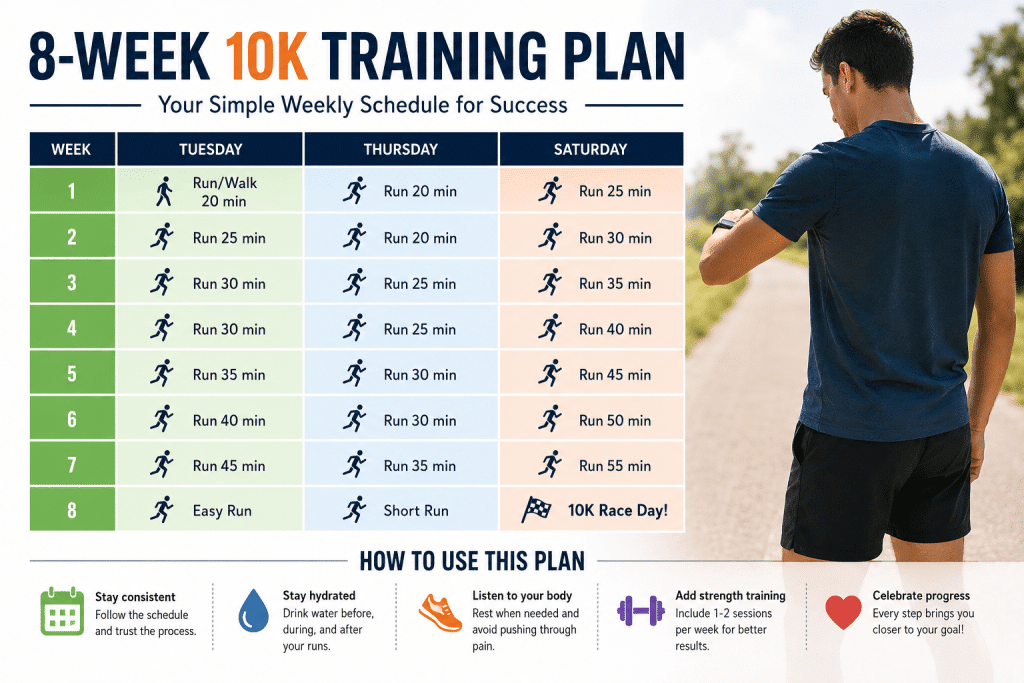
This simple 8-week beginner running schedule helps you increase endurance gradually while allowing enough recovery time.
8-Week 10K Training Plan
| Week | Tuesday | Thursday | Saturday |
|---|---|---|---|
| 1 | Run/Walk 20 min | Run 20 min | Run 25 min |
| 2 | Run 25 min | Run 20 min | Run 30 min |
| 3 | Run 30 min | Run 25 min | Run 35 min |
| 4 | Run 30 min | Run 25 min | Run 40 min |
| 5 | Run 35 min | Run 30 min | Run 45 min |
| 6 | Run 40 min | Run 30 min | Run 50 min |
| 7 | Run 45 min | Run 35 min | Run 55 min |
| 8 | Easy Run | Short Run | 10K Race Day |
How to Use This Running Schedule
- Monday and Friday: Rest or light walking
- Wednesday: Strength training or mobility work
- Sunday: Full recovery day
Your long Saturday run is the most important workout because it builds endurance for your 10K.
Best Foods for Beginner Runners
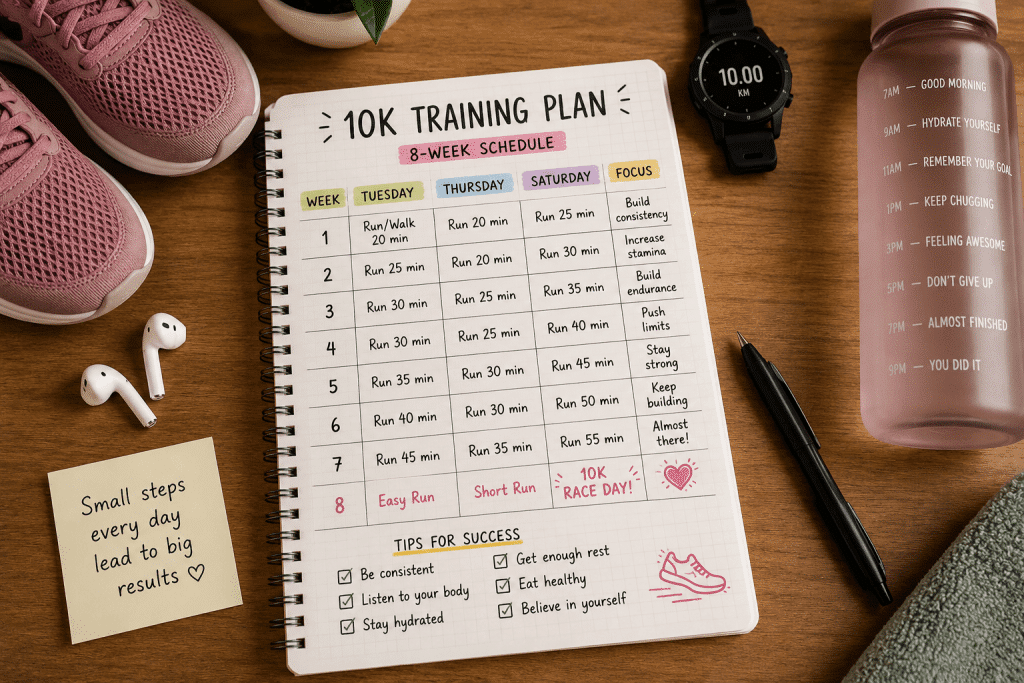
Nutrition plays a huge role in your performance and recovery.
You do not need a complicated diet, but you should fuel your body properly.
What to Eat Before Running
Eat light meals that provide quick energy.
Best Pre-Run Foods
| Food | Benefit |
|---|---|
| Banana | Fast carbohydrates |
| Oatmeal | Long-lasting energy |
| Toast with peanut butter | Balanced fuel |
| Greek yogurt | Protein and carbs |
Try eating 30–90 minutes before your run depending on your digestion.
Best Recovery Foods After Running

Recovery meals help repair muscles and restore energy.
Best Post-Run Foods
| Food | Recovery Benefit |
|---|---|
| Eggs | Muscle repair |
| Chicken and rice | Protein + carbohydrates |
| Smoothies | Hydration and nutrients |
| Salmon | Healthy fats and protein |
Hydration is equally important. Drink water consistently throughout the day instead of only after workouts.
Common Beginner Running Mistakes
Running Too Hard Every Day
Your body needs recovery.
Easy runs help you improve endurance without exhausting yourself. Training hard every session usually leads to fatigue or injuries.
Skipping Strength Training
Strength workouts improve running performance and stability.
Focus on exercises like:
- Squats
- Lunges
- Planks
- Glute bridges
Even two short strength sessions weekly can make a noticeable difference.
Comparing Yourself to Other Runners
Every runner progresses differently.
Some people improve quickly, while others need more time to adapt. Focus on your own progress instead of comparing your pace or distance to others online.
How to Stay Motivated During Your 10K Training Plan
Motivation comes and goes, but small habits keep you moving forward.
Here are simple ways to stay consistent:
- Set weekly goals
- Track your runs in an app
- Listen to music or podcasts
- Buy comfortable workout clothes
- Celebrate small improvements
You should also remember that not every run will feel amazing. Some days will feel difficult, and that is completely normal.
Progress happens through consistency, not perfection.
FAQ About a 10K Training Plan
Can beginners really run a 10K?
Yes. With proper training and gradual progression, most beginners can complete a 10K within 8–12 weeks.
How many days per week should beginners run?
Most beginner runners should train 3–4 days weekly while keeping recovery days between workouts.
Is walking allowed during a 10K?
Absolutely. Many beginners use walk/run intervals successfully during both training and races.
How long should beginner runs last?
Most beginner runs start around 20–30 minutes and gradually increase over time.
Conclusion
Starting a 10k training plan may seem intimidating today, but every experienced runner once stood exactly where you are now.
You do not need perfect conditions to begin. You only need the willingness to take the first step.
Focus on consistency, follow your weekly running schedule, fuel your body properly, and allow yourself time to improve. Some weeks will feel easier than others, but every run moves you closer to your goal.
Your first 10K is more than a race. It is proof that you can stay committed, overcome challenges, and build a healthier version of yourself.
Now lace up your shoes, start your training, and take that first run today.