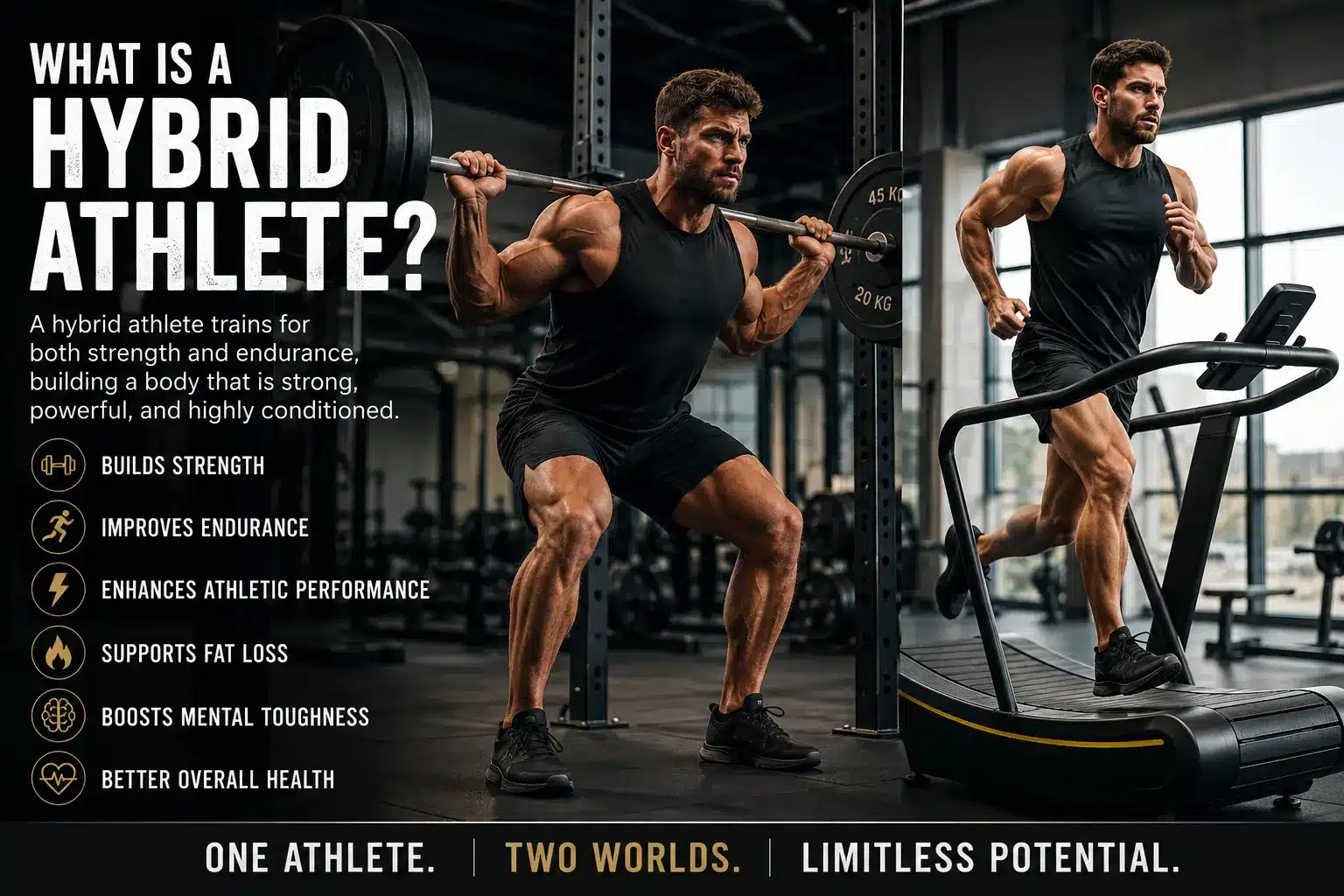
You don’t have to choose between being strong or having endurance anymore.
For years, the fitness world pushed people into categories. Lifters focused only on muscle and strength. Runners chased endurance while often losing size and power. But today, more athletes are realizing something important: your body performs best when you train both systems together.
That’s why the hybrid athlete training program has become one of the fastest-growing approaches in fitness.
When you combine strength training with endurance work, you build a body that not only looks athletic but also performs at a higher level in everyday life. You feel stronger during workouts, move better, recover faster, and develop the type of conditioning that translates into real-world performance.
Whether your goal is building muscle while improving your running, increasing athleticism, or simply becoming fitter overall, this guide will help you understand exactly how hybrid training works.
What Is a Hybrid Athlete?
A hybrid athlete is someone who trains for both strength and endurance at the same time.
Instead of focusing only on lifting heavy weights or only on cardio, you combine multiple training styles into one balanced system. A hybrid athlete training program usually includes:
- Strength training
- Hypertrophy workouts
- Running or conditioning
- Recovery sessions
- Mobility work
This approach creates a more complete athlete. You can build muscle while also improving cardiovascular fitness, stamina, and overall athletic performance.
Benefits of Hybrid Training
Hybrid training offers several advantages that traditional programs often miss:
- Improved cardiovascular health
- Better endurance and work capacity
- Increased lean muscle mass
- Higher calorie burn
- Better athletic performance
- Stronger mental discipline
- Improved recovery ability
Many modern athletes, including Nick Bare and Alex Viada, helped popularize this training style by proving that you can become stronger and faster at the same time.
How a Hybrid Athlete Training Program Works
The biggest challenge with hybrid training is balancing recovery. If you train too hard without structure, fatigue starts to accumulate quickly.
A successful hybrid athlete training program focuses on three core principles:
1. Progressive Strength Training
Your strength workouts should focus on compound movements that develop overall power and muscle mass.
Important exercises include:
- Squats
- Deadlifts
- Bench press
- Pull-ups
- Overhead press
- Rows
The goal is simple: gradually increase strength over time without sacrificing recovery.
2. Endurance Development
Endurance training improves your cardiovascular system and overall conditioning.
Your program should include:
- Zone 2 cardio
- Tempo runs
- Sprint intervals
- Long-distance runs
This combination helps improve stamina while reducing the risk of overtraining.
3. Recovery Optimization
Recovery is where your body adapts and improves. Without proper recovery, performance starts dropping fast.
Key recovery habits include:
- Sleeping 7–9 hours
- Eating enough protein and carbohydrates
- Hydrating consistently
- Taking recovery days seriously
- Using mobility and stretching work
The Ultimate Weekly Hybrid Athlete Training Program
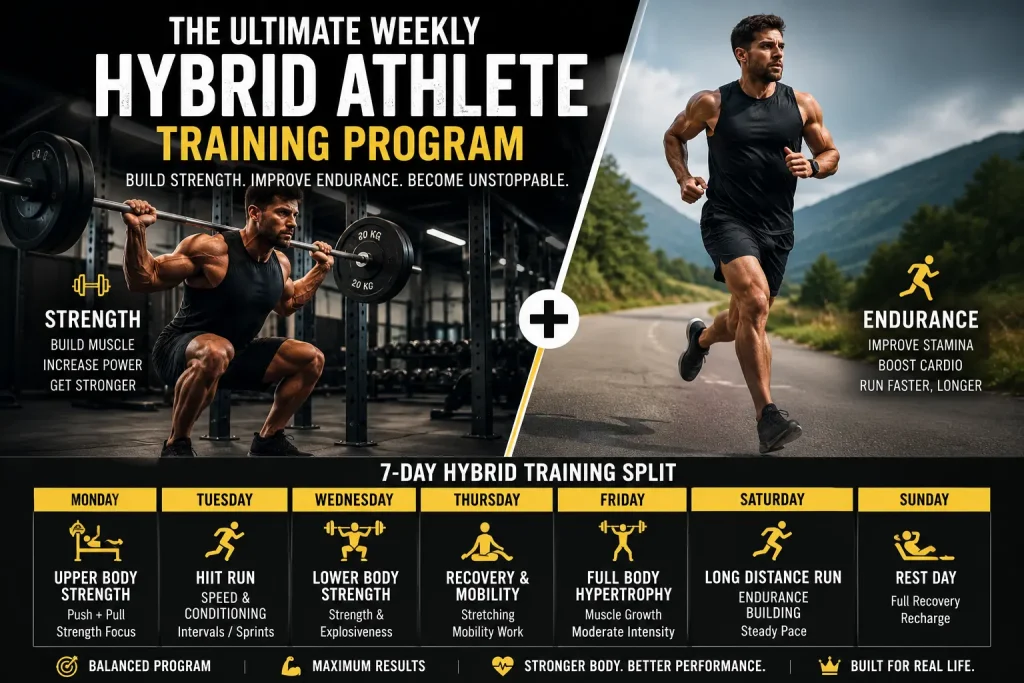
One of the best ways to structure hybrid training is by separating high-intensity strength sessions from endurance-focused workouts.
Here’s a balanced weekly schedule you can follow:
| Day | Workout | Focus |
|---|---|---|
| Monday | Upper Body Strength | Muscle & power |
| Tuesday | HIIT Running | Speed & conditioning |
| Wednesday | Lower Body Strength | Strength & explosiveness |
| Thursday | Mobility & Recovery | Recovery |
| Friday | Full Body Hypertrophy | Muscle growth |
| Saturday | Long Distance Run | Endurance |
| Sunday | Rest Day | Full recovery |
This structure gives your body enough stimulus to improve while still allowing proper recovery between sessions.
Best Exercises for Hybrid Athletes
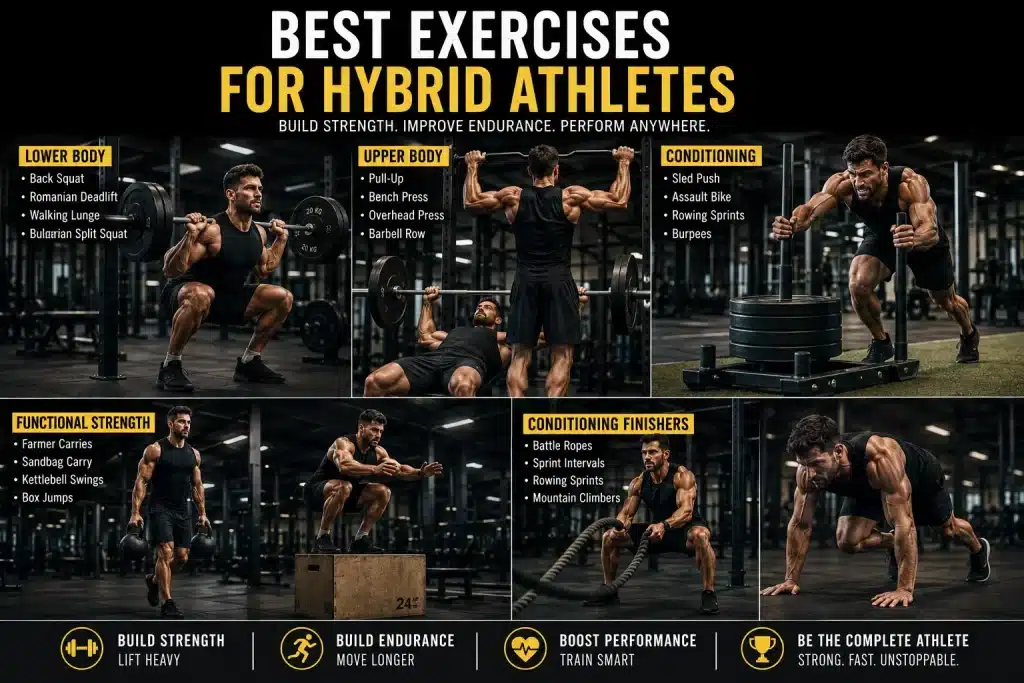
Not every exercise works well inside a hybrid athlete training program. You need movements that deliver maximum results without excessive fatigue.
Best Upper Body Exercises
- Pull-ups
- Incline bench press
- Dumbbell shoulder press
- Barbell rows
- Dips
Best Lower Body Exercises
- Front squats
- Romanian deadlifts
- Walking lunges
- Bulgarian split squats
- Step-ups
Best Conditioning Exercises
- Sled pushes
- Farmer carries
- Assault bike intervals
- Hill sprints
- Rowing machine sprints
These exercises improve athletic performance while helping you maintain strength and endurance together.
Nutrition for Hybrid Athletes
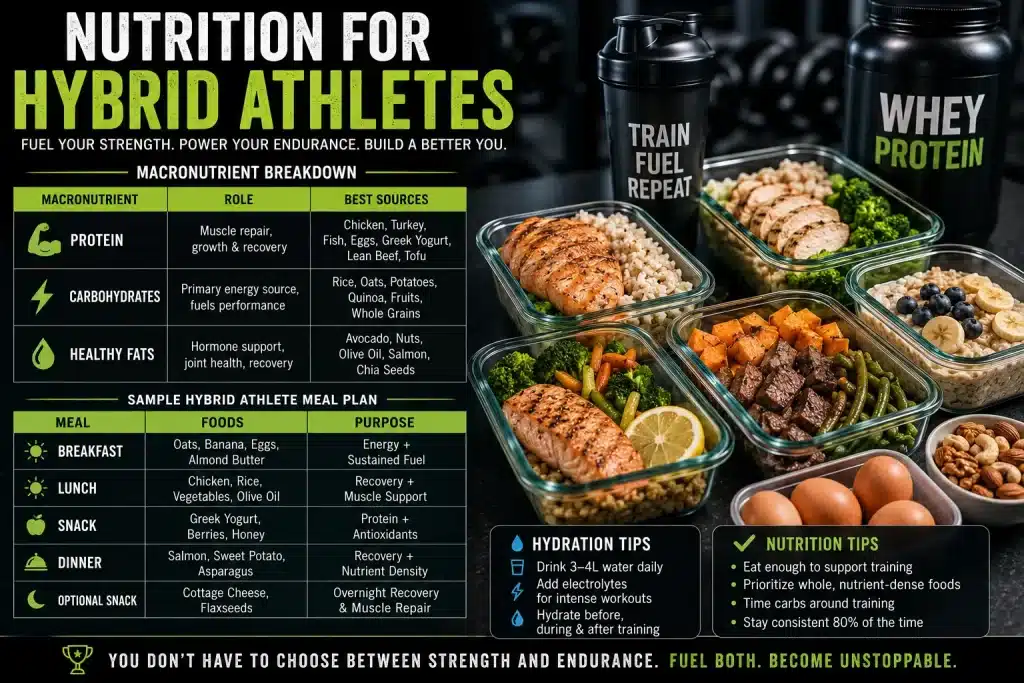
Nutrition becomes even more important when you train for both strength and endurance.
Your body needs enough fuel to recover from lifting sessions while also supporting cardiovascular performance.
Macronutrient Breakdown
| Macronutrient | Role | Best Sources |
|---|---|---|
| Protein | Muscle recovery | Chicken, eggs, fish |
| Carbohydrates | Energy production | Rice, oats, fruit |
| Healthy Fats | Hormonal support | Nuts, olive oil, avocado |
Sample Hybrid Athlete Meal Plan
| Meal | Ingredients |
|---|---|
| Breakfast | Oats, eggs, banana |
| Lunch | Chicken breast, rice, vegetables |
| Snack | Greek yogurt with berries |
| Dinner | Salmon, potatoes, salad |
Carbohydrates are especially important in hybrid training because they help replenish glycogen stores after intense sessions.
If you constantly feel tired during workouts, under-eating is usually one of the main reasons.
Common Mistakes Hybrid Athletes Make
Many people fail with hybrid training because they try to do too much too quickly.
Here are the most common mistakes:
Doing Excessive Cardio
Too much high-intensity cardio can negatively affect muscle recovery and strength progression.
Ignoring Recovery
Training hard without proper sleep and nutrition leads to burnout fast.
Poor Workout Structure
Random workouts create random results. Your program needs balance and progression.
Not Eating Enough
Hybrid athletes burn a large amount of calories. Undereating hurts both recovery and performance.
Best Supplements for Hybrid Athletes
Supplements won’t replace hard work, but they can support your recovery and performance.
Most Effective Supplements
- Whey protein
- Creatine monohydrate
- Electrolytes
- Omega-3 fish oil
- Caffeine
Creatine is especially useful because it supports both strength performance and recovery capacity.
How Long Does It Take to See Results?
Most people notice improvements surprisingly fast when they follow a structured hybrid athlete training program consistently.
Here’s a general timeline:
- 2–4 weeks: Better energy and conditioning
- 4–8 weeks: Strength increases
- 8–12 weeks: Visible body composition changes
- 3–6 months: Major endurance improvements
Consistency matters more than perfection.
The athletes who get the best results are usually the ones who stay patient and avoid extreme training approaches.
FAQ About Hybrid Athlete Training Program
Can you build muscle and endurance at the same time?
Yes. With proper programming, nutrition, and recovery, you can improve both simultaneously.
Is running bad for muscle growth?
No. Excessive cardio without recovery can affect gains, but balanced endurance training actually improves work capacity and recovery.
How many days a week should a hybrid athlete train?
Most people perform best with 4–6 training days per week depending on recovery ability.
What should hybrid athletes eat?
A balanced diet rich in protein, carbohydrates, healthy fats, and micronutrients works best.
Conclusion
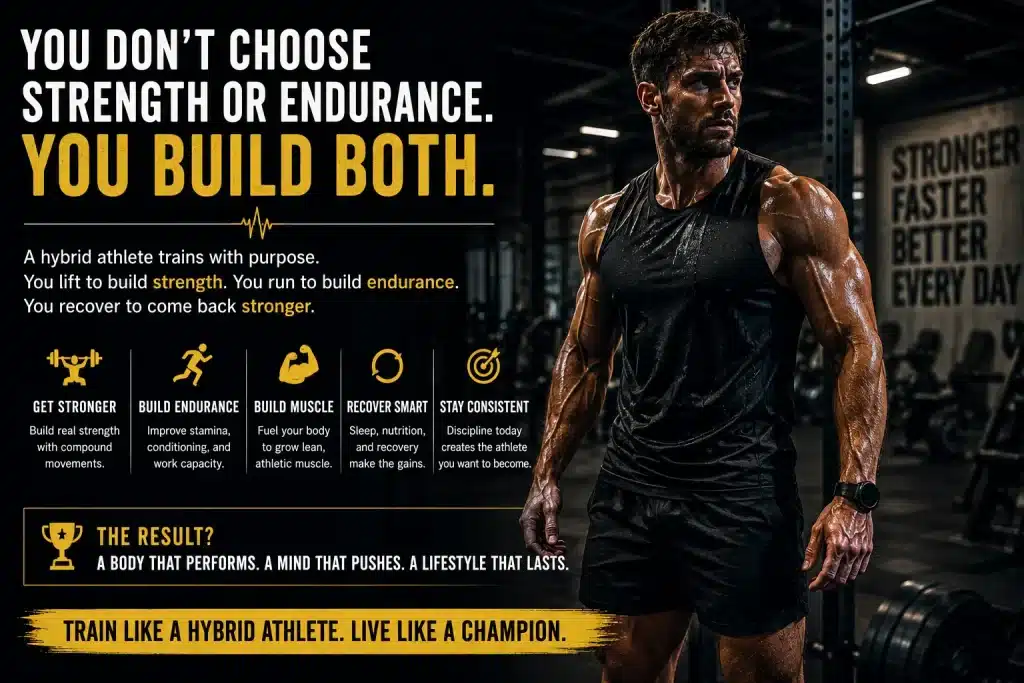
The best hybrid athlete training program doesn’t force you to choose between strength and endurance.
It helps you develop both.
You become stronger in the gym while improving conditioning, stamina, and athletic performance at the same time. More importantly, hybrid training creates a body that feels capable in every situation — whether you’re lifting heavy, running long distances, or simply handling everyday physical challenges more easily.
Start simple. Focus on consistency. Recover properly. And give your body time to adapt.
Over time, you’ll build the type of athleticism that most people never experience.
Now it’s your turn.
Are you ready to train like a complete athlete and unlock both strength and endurance together?